July 15, 2026
Local LLMs for Enterprise: A Guide to Secure On-Device AI
Discover how local Large Language Models offer businesses a path to secure, private, and cost-effective AI without the risks of cloud-based systems.
The Shift Toward Private Intelligence
For the past two years, the conversation around Artificial Intelligence has been dominated by massive cloud providers. Names like OpenAI, Google, and Anthropic have become household staples. However, as the initial novelty fades, enterprises are facing a harsh reality: sending sensitive company data to a third-party server creates significant risks. For founders and product leads, the priority is shifting from just using AI to securing the environment where that AI lives.
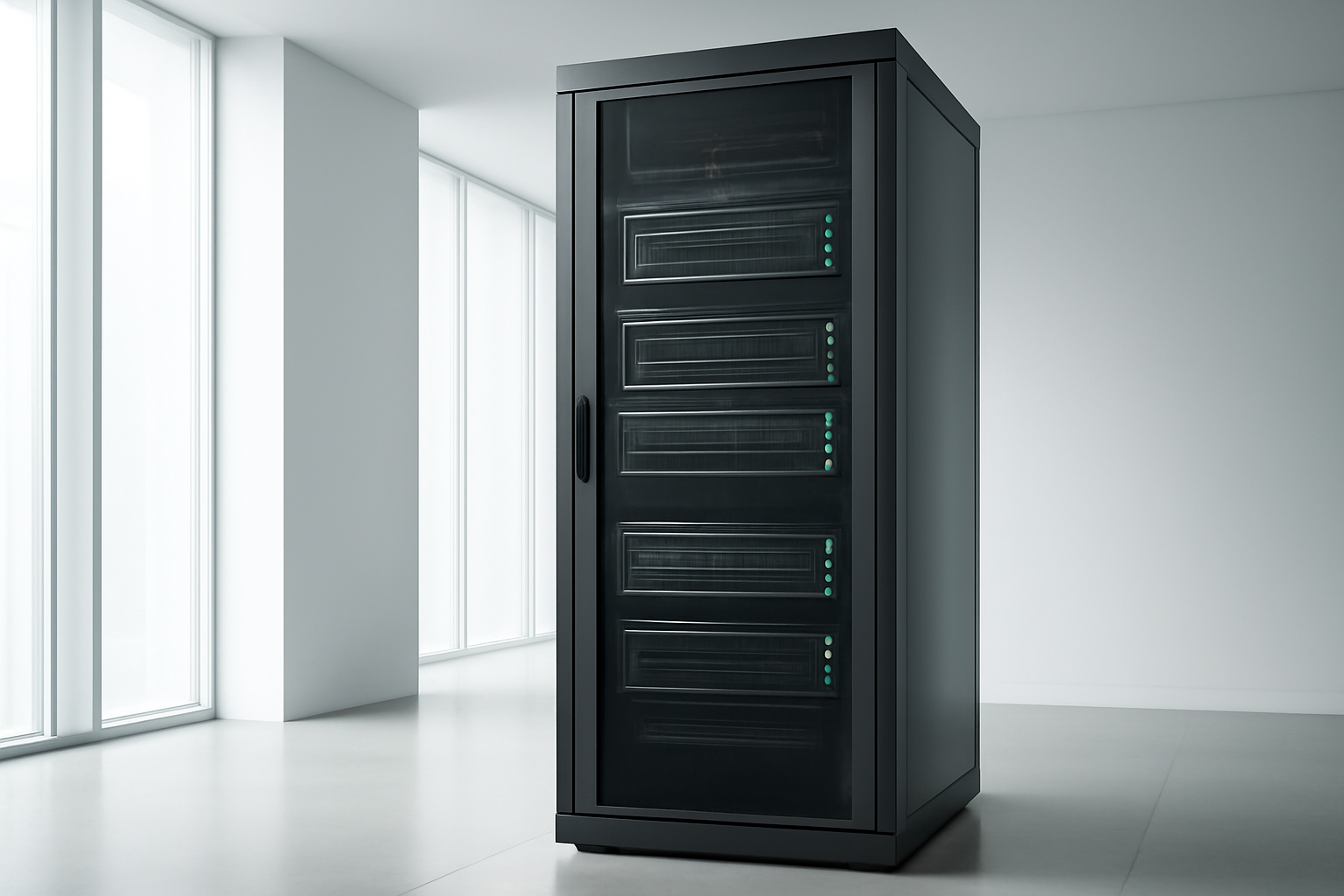
Local Large Language Models (LLMs) represent a fundamental change in this strategy. Instead of relying on a distant data center, these models run on your own hardware. Whether it is a dedicated local server or a powerful workstation, the data never leaves your infrastructure. This approach offers a level of control and security that cloud providers simply cannot match by design.
Why Local AI is Gaining Momentum
The push for local AI is not just about paranoia. It is a calculated move toward efficiency and intellectual property protection. When you use a public API, your prompts and data could potentially be used to train future versions of that model. For a design studio or a software house, this means your secret sauce might eventually leak into the public domain. Local models eliminate this concern entirely.
Furthermore, local execution solves the problem of latency and recurring costs. While the initial investment in hardware or setup might be higher, the long-term cost of running thousands of queries becomes nearly zero. You are no longer at the mercy of a service provider's pricing shifts or downtime.
The Technical Landscape
Running high-quality AI locally used to require a room full of servers. That is no longer the case. Thanks to techniques like quantization, which compresses models without losing much accuracy, and the rise of dedicated AI chips in consumer devices, high-performance AI is now accessible. Tools like Ollama, LM Studio, and Llama.cpp have made it incredibly easy for developers to deploy models such as Llama 3 or Mistral in a matter of minutes.
Key Benefits for the Modern Enterprise
- Data Sovereignty: Your data stays under your roof. This is critical for industries like healthcare, finance, and legal services where compliance is mandatory.
- Customization: You can fine-tune local models on your specific codebase or internal documentation without risking data exposure.
- Offline Reliability: Local models work without an internet connection. This ensures your internal tools remain functional even during network outages.
- No Rate Limits: Cloud APIs often throttle your usage. With local hardware, you can run your models as hard as your cooling systems allow.
Choosing the Right Hardware
To run these models effectively, the focus should be on Video RAM (VRAM). Modern Apple Silicon Macs are popular choices for local AI because of their unified memory architecture. For Windows or Linux environments, NVIDIA GPUs remain the gold standard. The goal is to ensure the entire model can fit into the memory of the graphics card to achieve fast, human-like typing speeds in the output.
Practical Implementation Steps
Transitioning to local AI doesn't happen overnight. It starts with identifying the right use cases. Internal knowledge bases, automated code generation, and sensitive document summarization are excellent starting points. These are areas where the risk of using public cloud services outweighs the convenience.
Next, your team should experiment with different model sizes. A smaller 7-billion parameter model is often enough for simple tasks like text classification or sentiment analysis. Larger 70-billion parameter models are better suited for complex reasoning and creative writing. Finding the balance between speed and capability is a core part of the design process.
"Local AI is not just about security; it is about reclaiming the freedom to innovate without asking for permission from a cloud provider."
Managing the Trade-offs
It is important to be realistic. Local models may not always match the raw power of the largest cloud models like GPT-4. There is also a maintenance burden. You are responsible for updates, hardware health, and internal API uptime. However, for most business applications, a slightly less powerful model that is 100% secure is far more valuable than a slightly smarter model that exposes your trade secrets.
Takeaways for Your Strategy
If you are looking to integrate local AI into your workflow, keep these three points in mind:
- Start Small: Deploy a local instance of a model for a single internal department before scaling to the whole company.
- Audit Your Data: Identify which data is too sensitive for the cloud and make that the primary target for your local AI efforts.
- Invest in Memory: When buying hardware for AI, prioritize VRAM over raw processor speed. Memory is the bottleneck for model performance.
The Future of On-Device Intelligence
We are moving toward a world where every device has a slice of intelligence built-in. For the enterprise, this means a shift away from centralized silos toward a distributed, secure network of private models. This evolution empowers teams to build faster, protect their clients better, and reduce their dependence on external tech giants.
By investing in local LLMs today, you are not just upgrading your tech stack. You are building a foundation of privacy and autonomy that will define the next decade of digital product development. Secure, fast, and entirely yours—that is the promise of local AI.